The Shure MV7+ has spent 2026 as the default recommendation in home-office podcasting threads, and Shure hasn’t stood still with it. A recent Amazon price drop knocked it from its $319 list price down toward $287, and Shure used the year to expand the lineup with the MV7i — a version that swaps the standalone mic for a built-in two-channel audio interface, aimed at anyone recording co-hosts or instruments from the same desk. That leaves buyers with a real decision to make, not just “MV7+ or nothing.”
The core pitch hasn’t changed: a dynamic cardioid mic that runs as a plug-and-play USB device today and steps up to full XLR interface duty later, with Shure’s MOTIV Mix app handling gain, EQ, and noise reduction so you don’t need to learn audio engineering to sound broadcast-ready. The question worth answering in 2026 is whether that convenience still justifies the price against the Rode PodMic USB, which has closed the sound-quality gap considerably, and whether the interface-equipped MV7i is worth the jump for anyone whose setup includes more than one mic.
| Spec | Shure MV7+ USB/XLR Podcast Microphone | Rode PodMic USB Dynamic Broadcast Microphone | Shure MV7i Smart Microphone with Audio Interface |
|---|---|---|---|
| Rating | 8.4/10 | 8.2/10 | 8.3/10 |
| Price | $269.77-$299.00as of Oct 18, 2026 | $164.99-$190.00as of Oct 18, 2026 | $350.00-$389.00as of Oct 18, 2026 |
| Type | Dynamic cardioid, hybrid XLR + USB-C | Dynamic cardioid, hybrid XLR + USB-C | Dynamic cardioid mic + built-in 2-channel interface |
| Sample Rate | 48kHz / 24-bit | — | — |
| Frequency Response | 50Hz-16kHz | — | — |
| Software | Shure MOTIV Mix app | Rode Central (Mac/PC) | Shure MOTIV Mix app |
| Onboard Controls | LED touch panel (gain, mute, headphone volume) | — | — |
| Certifications | OBS certified | — | — |
| Weight | 1.26 lbs | 1.6 lbs | — |
| Warranty | 2-year limited (wired mic) | — | — |
| Preamp | — | Rode Revolution Preamp | — |
| Onboard DSP | — | Aphex compressor, exciter, high-pass filter, noise gate | — |
| Bit Depth | — | 24-bit | — |
| Latency | — | Near-zero hardware monitoring | — |
| Inputs | — | — | XLR, 1/4-inch instrument, USB-C |
| Gain | — | — | Up to +60dB, 48V phantom power |
| Channels | — | — | 2 (mix a second mic or instrument) |
| Connectivity | — | — | USB-C for Mac, PC, iOS, Android |
| Check Price → | Check Price → | Check Price → |
Prices change daily — tap Check Price for the current Amazon price.

Shure MV7+ USB/XLR Podcast Microphone
Pros
- Hybrid USB-C and XLR outputs mean it works as a plug-and-play USB mic now and scales into a full XLR interface setup later without buying a second mic
- Auto Level Mode in the Shure MOTIV Mix app adjusts gain in real time based on distance and volume, so new podcasters get consistent levels without touching a compressor
- Voice Isolation Technology and the real-time denoiser strip room noise and keyboard clatter from the signal before it reaches your recording software
- LED touch panel puts mute, gain, and headphone volume at your fingertips without alt-tabbing to software mid-recording
Cons
- USB-mode output sounds noticeably more hollow and congested than the XLR output or rivals like the Rode PodMic USB, according to independent audio comparisons
- Real-time headphone monitoring shows noticeable latency at low volume levels when the onboard DSP is active
- Shock rejection and plosive handling are mediocre out of the box — a pop filter or foam windscreen is close to mandatory for close-mic'd vocals
- At $287-$319, it costs roughly $100 more than the Rode PodMic USB for a sound-quality gap that narrows sharply once audio is compressed for a podcast platform
Who This Mic Is For
The MV7+ targets remote workers and creators who record solo — podcast hosts, YouTubers, streamers, and anyone doing client calls or voiceover work from a home office — and want one mic that works immediately over USB-C but doesn’t get outgrown if they eventually add an audio interface and a second XLR mic.
It’s a poor fit for two groups: casual users who just need clear audio for Zoom calls (a good USB headset costs a third as much and does the job), and creators who already know they need to mix a second mic or instrument, who are better served going straight to the MV7i.
Sound Quality and Processing
The MV7+‘s raw capture over XLR is clean, warm, and well-suited to voice work — the cardioid pattern rejects off-axis room noise effectively, which matters in a home office without acoustic treatment. Over USB-C, independent comparisons consistently find the digital output sounds thinner and more processed than the analog XLR signal, a real trade-off for anyone who plugs in over USB-C for convenience and skips the audio interface entirely.
Where the MV7+ earns its price is the DSP stack. Auto Level Mode continuously adjusts gain based on how far you sit from the mic and how loud you’re talking, which matters more than it sounds — most new podcasters either clip their peaks or record too quiet, and this mode prevents both. The real-time denoiser strips keyboard clatter, HVAC hum, and room echo before the signal ever reaches your recording app. Combined, a first-time host gets usable, broadcast-consistent audio without touching a compressor plugin.
The catch is latency. When the onboard DSP is active and headphone monitoring volume is set low, several reviewers flagged a noticeable delay between speaking and hearing yourself — distracting enough that some users disable real-time monitoring or record at higher headphone levels to mask it. The Rode PodMic USB’s hardware-based Aphex DSP chip processes with near-zero latency, which is the single clearest technical advantage it holds over the MV7+.
Design and Everyday Use
The customizable LED touch panel is the MV7+‘s most visible upgrade over the original MV7. It puts mute, gain, and headphone volume on the mic body itself, so you’re not reaching for a laptop trackpad mid-recording to fix a levels problem. It’s a small thing that matters every single session.
Build quality is solid — all-metal housing, a reassuringly heavy base — but shock rejection and plosive handling are only average. Recording close to the capsule without a pop filter produces audible plosives on hard consonants, so budget for a foam windscreen or external pop filter if you’re mic’ing up tight, which most desk setups do by default.
Shure MV7+ vs. the Alternatives
Rode PodMic USB — The Value Pick
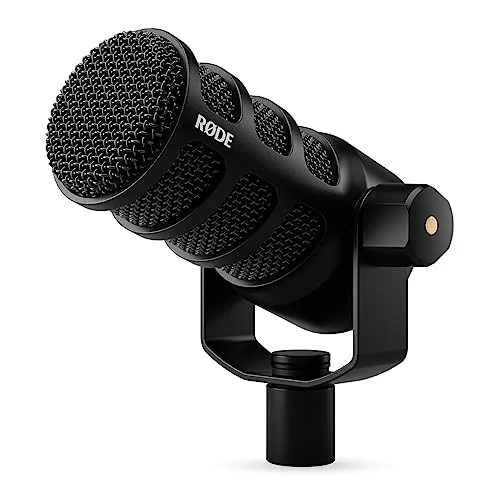
Rode PodMic USB Dynamic Broadcast Microphone
Pros
- Roughly $100-$140 cheaper than the Shure MV7+, with independent A/B tests putting its processed sound within about 93% of the MV7+'s processed output
- Onboard Aphex DSP chip runs compression, an exciter, a high-pass filter, and a noise gate with zero CPU load on your computer
- Near-zero-latency hardware monitoring beats the MV7+'s USB-mode monitoring lag for real-time headphone feedback while recording
- Same hybrid XLR + USB-C flexibility as the MV7+, so it scales into a full audio interface setup later
Cons
- Rode Central software offers less granular EQ and compression control than Shure's MOTIV Mix app
- No LED touch panel or onboard display — gain and mute adjustments mean reaching for the mic body or opening the app
- Raw, unprocessed capture trails the MV7+'s raw signal; the gap only closes once both are run through their respective DSP chains
The PodMic USB is the more interesting comparison than it was at launch. It shares the same hybrid XLR/USB-C design philosophy as the MV7+, runs its own onboard DSP with zero CPU overhead, and now processes close enough to the MV7+‘s output that the difference mostly disappears once both are run through a podcast platform’s own compression. For roughly $100-$140 less, it’s the stronger buy for anyone whose top priority is sound-per-dollar rather than app polish or an LED control panel.
Shure MV7i — The Multi-Source Upgrade
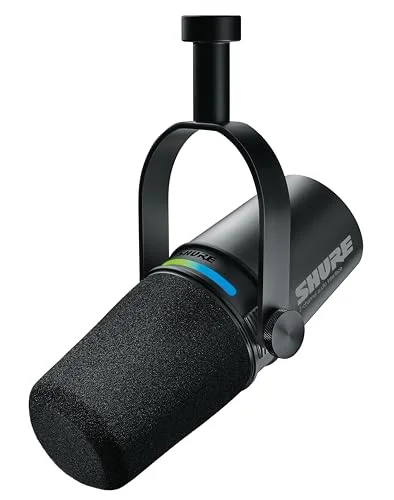
Shure MV7i Smart Microphone with Audio Interface
Pros
- Built-in 2-channel interface lets you plug in a second mic, guitar, or condenser mic with 48V phantom power — no separate audio interface needed
- Up to +60dB of gain drives quiet dynamic mics and low-output sources more cleanly than the standalone MV7+
- Same MOTIV Mix DSP stack as the MV7+, so solo hosts get identical Auto Level Mode and voice isolation processing
- Reviewers describe it as the most versatile all-in-one option for creators recording co-hosts, guests, or instruments from one desk
Cons
- $349-$389 is $60-$100 more than the standalone MV7+ for interface features that solo, mic-only podcasters won't use
- Larger footprint and more onboard controls add a learning curve compared to the simpler MV7+
- Still inherits the same USB-mode monitoring latency as the MV7+ when DSP processing is active
The MV7i isn’t really competing with the MV7+ for the same buyer — it’s the answer for anyone who outgrows a single-mic setup. Built-in +60dB gain and 48V phantom power mean you can run a second XLR condenser mic or an instrument through the same box, with the identical MOTIV Mix processing the MV7+ uses. For a solo host recording nothing but their own voice, it’s $60-$100 of interface hardware you’ll never use. For anyone bringing on a regular co-host or recording musicians, it removes the need to buy a separate audio interface entirely.
Buying Guide
Buy the Shure MV7+ if: you record solo, want the most polished control app and physical LED touch panel, and value flexibility to add an XLR interface down the road without replacing the mic.
Buy the Rode PodMic USB if: budget matters more than software polish, you want the lowest possible monitoring latency, and you’re comfortable with a slightly less refined control app.
Buy the Shure MV7i if: your setup regularly includes a second voice, guitar, or condenser mic, and you’d rather pay once for an all-in-one interface than add a separate audio interface later.
Either way, budget for a pop filter or foam windscreen. Neither the MV7+ nor the PodMic USB handles plosives cleanly straight out of the box, and a $15-$25 accessory fixes it completely.
FAQ
Is the Shure MV7+ worth $287-$319 in 2026? For solo podcasters and streamers who want a mic that works instantly over USB-C and scales into a full XLR setup later, yes. If sound-per-dollar is your only criteria, the Rode PodMic USB gets close enough that the extra $100+ is hard to justify on audio quality alone — you’re mostly paying for the MOTIV Mix app and the LED touch panel.
Should I get the Shure MV7+ or the Shure MV7i? The MV7+ is the right choice for anyone recording alone. The MV7i only makes sense once you need to mix in a second mic, instrument, or guest running through their own XLR line — its built-in interface and 48V phantom power solve a problem the MV7+ can’t.
Does the Shure MV7+ need an audio interface? No. It connects over USB-C and works as a standalone digital mic. The XLR output exists for anyone who already owns or later buys a separate audio interface or mixer and wants the cleaner analog signal path.
Why does the MV7+ sound different over USB vs. XLR? The USB-C path runs the signal through the mic’s internal analog-to-digital converter and DSP chain before it reaches your computer, which several independent comparisons describe as thinner and more processed than the analog XLR output run through an external interface. Most solo creators won’t notice once the track is compressed for their platform, but it’s measurable in raw recordings.
Is the Rode PodMic USB actually as good as the Shure MV7+? Close. Independent processed-audio comparisons put the PodMic USB at roughly 93% of the MV7+‘s quality once both run through their onboard DSP, with the PodMic USB actually winning on monitoring latency. The MV7+‘s advantages are its LED touch panel and the more capable MOTIV Mix software, not a decisive sound-quality gap.
Conclusion
The Shure MV7+ remains the mic to beat for solo remote workers who want broadcast-ready audio without an audio engineering learning curve — the Auto Level Mode and noise processing genuinely deliver on that promise, and the LED touch panel is a real convenience upgrade. But 2026 pricing narrows its edge: the Rode PodMic USB gets close enough on processed sound quality, with better monitoring latency, that budget-conscious buyers have a legitimate reason to save the $100+. And anyone whose setup includes more than one voice or instrument should skip the MV7+ entirely and look at the MV7i’s built-in interface instead.
Bottom line: Solo hosts who want the most polished software experience should get the MV7+. Everyone counting dollars should get the Rode PodMic USB. Anyone mixing a second source should go straight to the MV7i.
Detailed Reviews
Shure MV7+ USB/XLR Podcast Microphone
Pros
- Hybrid USB-C and XLR outputs mean it works as a plug-and-play USB mic now and scales into a full XLR interface setup later without buying a second mic
- Auto Level Mode in the Shure MOTIV Mix app adjusts gain in real time based on distance and volume, so new podcasters get consistent levels without touching a compressor
- Voice Isolation Technology and the real-time denoiser strip room noise and keyboard clatter from the signal before it reaches your recording software
- LED touch panel puts mute, gain, and headphone volume at your fingertips without alt-tabbing to software mid-recording
Cons
- USB-mode output sounds noticeably more hollow and congested than the XLR output or rivals like the Rode PodMic USB, according to independent audio comparisons
- Real-time headphone monitoring shows noticeable latency at low volume levels when the onboard DSP is active
- Shock rejection and plosive handling are mediocre out of the box — a pop filter or foam windscreen is close to mandatory for close-mic'd vocals
- At $287-$319, it costs roughly $100 more than the Rode PodMic USB for a sound-quality gap that narrows sharply once audio is compressed for a podcast platform
Rode PodMic USB Dynamic Broadcast Microphone
Pros
- Roughly $100-$140 cheaper than the Shure MV7+, with independent A/B tests putting its processed sound within about 93% of the MV7+'s processed output
- Onboard Aphex DSP chip runs compression, an exciter, a high-pass filter, and a noise gate with zero CPU load on your computer
- Near-zero-latency hardware monitoring beats the MV7+'s USB-mode monitoring lag for real-time headphone feedback while recording
- Same hybrid XLR + USB-C flexibility as the MV7+, so it scales into a full audio interface setup later
Cons
- Rode Central software offers less granular EQ and compression control than Shure's MOTIV Mix app
- No LED touch panel or onboard display — gain and mute adjustments mean reaching for the mic body or opening the app
- Raw, unprocessed capture trails the MV7+'s raw signal; the gap only closes once both are run through their respective DSP chains
Shure MV7i Smart Microphone with Audio Interface
Pros
- Built-in 2-channel interface lets you plug in a second mic, guitar, or condenser mic with 48V phantom power — no separate audio interface needed
- Up to +60dB of gain drives quiet dynamic mics and low-output sources more cleanly than the standalone MV7+
- Same MOTIV Mix DSP stack as the MV7+, so solo hosts get identical Auto Level Mode and voice isolation processing
- Reviewers describe it as the most versatile all-in-one option for creators recording co-hosts, guests, or instruments from one desk
Cons
- $349-$389 is $60-$100 more than the standalone MV7+ for interface features that solo, mic-only podcasters won't use
- Larger footprint and more onboard controls add a learning curve compared to the simpler MV7+
- Still inherits the same USB-mode monitoring latency as the MV7+ when DSP processing is active