Affiliate disclosure: SetupRanked earns a commission from qualifying Amazon purchases at no extra cost to you.
Sony launched the WF-1000XM6 in February 2026 with a new QN3e processor — four microphones per earbud, 25% stronger ANC than the previous generation, and a slimmer body that makes all-day wear noticeably less fatiguing. A month later, Samsung released the Galaxy Buds4 Pro (March 2026) with the first dual-driver design in the Galaxy lineup and Bluetooth 6.1. Meanwhile, the AirPods Pro 3 has dropped to $199–$200 on Amazon — $50 below the $249 MSRP — making them the best-value premium earbud for anyone already on Apple hardware.
This roundup covers five earbuds built to hold up through a remote workday: strong ANC for focus blocks, reliable call mic performance for back-to-back video calls, and enough battery to avoid mid-afternoon case charges.
Quick picks: For outright ANC and call clarity, the Sony WF-1000XM6 ($299) leads the category. For Apple users, the AirPods Pro 3 ($199 street) integrates better with Mac and iPhone at a meaningfully lower price. For enterprise Teams environments, the Jabra Evolve2 Buds ($269) have no equal for hardware call controls and bone conduction mic technology.
Comparison
| Spec | Sony WF-1000XM6 | Apple AirPods Pro 3 | Bose QuietComfort Ultra Earbuds 2nd Gen | Jabra Evolve2 Buds | Samsung Galaxy Buds4 Pro |
|---|---|---|---|---|---|
| Rating | 9.3/10 | 9.1/10 | 8.9/10 | 8.6/10 | 8.5/10 |
| Price | $225.83-$328.00as of Oct 18, 2026 | $189.05-$199.00as of Oct 18, 2026 | $259.99-$299.00as of Oct 18, 2026 | Unavailable | $199.99-$244.99as of Oct 18, 2026 |
| ANC Processor | QN3e | — | — | — | — |
| Mics Per Earbud | 4 microphones | — | — | — | — |
| Battery Life | 8hr buds + 16hr case (24hr total) | 6hr buds + up to 30hr with case | 6hr buds + 18hr case (24hr total) | 8hr buds + 33hr case (41hr total) | 6hr buds (ANC on) + 26hr case (32hr total) |
| Bluetooth | 5.3 | 5.3 | 5.3 | 5.2 | 6.1 |
| Water Resistance | IPX4 | IP54 (buds), IPX4 (case) | IPX4 | IP54 | IP57 |
| Multipoint | Yes (2 devices) | Yes (Apple ecosystem) | Yes (2 devices) | — | — |
| Charging | USB-C | USB-C + MagSafe wireless | USB-C + wireless | — | USB-C |
| Chip | — | Apple H2 | — | — | — |
| Special Features | — | Live Translation, Heart Rate Sensing | — | — | — |
| ANC | — | — | World-class active noise cancellation | — | Adaptive ANC 2.0 |
| Key Features | — | — | SpeechClarity, CustomTune, Cinema Mode | — | — |
| Microphones | — | — | — | 4-mic MultiSensor Voice + bone conduction | — |
| Certifications | — | — | — | Microsoft Teams, Zoom, Google Meet | — |
| Dongle | — | — | — | Included USB-A dongle | — |
| Fast Charge | — | — | — | 5 min = 1hr playback | — |
| Driver | — | — | — | — | 11mm dynamic + 5.4mm planar dual-driver |
| Hi-Res Audio | — | — | — | — | 24-bit |
| Check Price → | Check Price → | Check Price → | Check Price → | Check Price → |
Prices change daily — tap Check Price for the current Amazon price.
The Picks
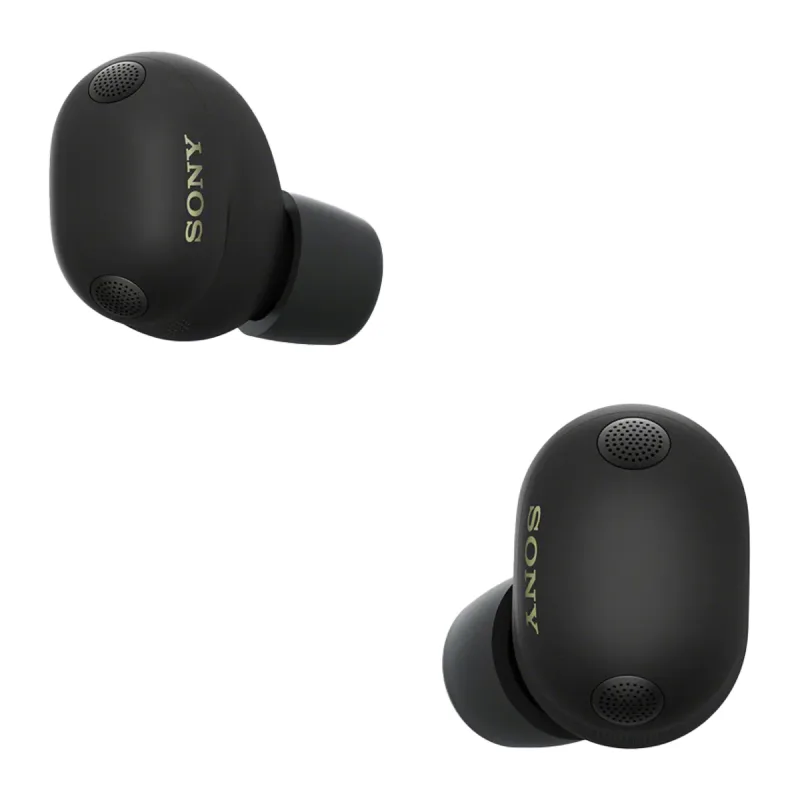
Sony WF-1000XM6
Pros
- QN3e chip delivers 25% stronger noise cancellation than the XM5 generation
- Four mics per earbud with beamforming isolates voice clearly on calls
- 11% slimmer body than XM5 — noticeably more comfortable for all-day wear
- Multipoint connects to laptop and phone simultaneously with fast switching
- 32-bit audio processing with LDAC support for lossless audio quality
Cons
- Street price of $299 is the highest in this roundup
- 8-hour per-charge battery, while good, still trails the Jabra's 41-hour total
- Large charging case compared to the AirPods Pro 3 case
The WF-1000XM6 is the most significant earbud hardware refresh Sony has shipped in years. The QN3e processor — shared with the WH-1000XM6 over-ear headphones — drives a four-microphone array per earbud. Two outer mics capture ambient sound for ANC reference signals; two inner mics isolate voice for call audio. The result is the strongest noise cancellation currently available in a true wireless earbud, combined with call mic performance that remote workers care about most.
For call-heavy workdays, the beamforming configuration narrows pickup to voice while suppressing keyboard clicks, HVAC noise, and shared-space chatter. Callers consistently report clean audio even when the remote worker is in a coffee shop or coworking space.
The body is 11% slimmer than the XM5 generation. For all-day wear through dense call schedules, that reduction matters — less pressure, fewer ear fatigue reports in owner reviews. Battery is 8 hours per charge with ANC active, plus 16 hours from the case for 24 hours total. Street price has settled around $299 since the initial $329.99 launch in February 2026.
At $299, the XM6 is the most expensive option here. That premium is justified if ANC depth and call mic clarity are the top priorities. Apple ecosystem users will get better value from the AirPods Pro 3 for less.
Buy this if: ANC quality and call mic clarity are non-negotiable, and you want the best hardware currently available regardless of platform.
Skip this if: You primarily use Apple hardware — the AirPods Pro 3 integrates better and costs less. Or if enterprise call certifications matter to your workflow.
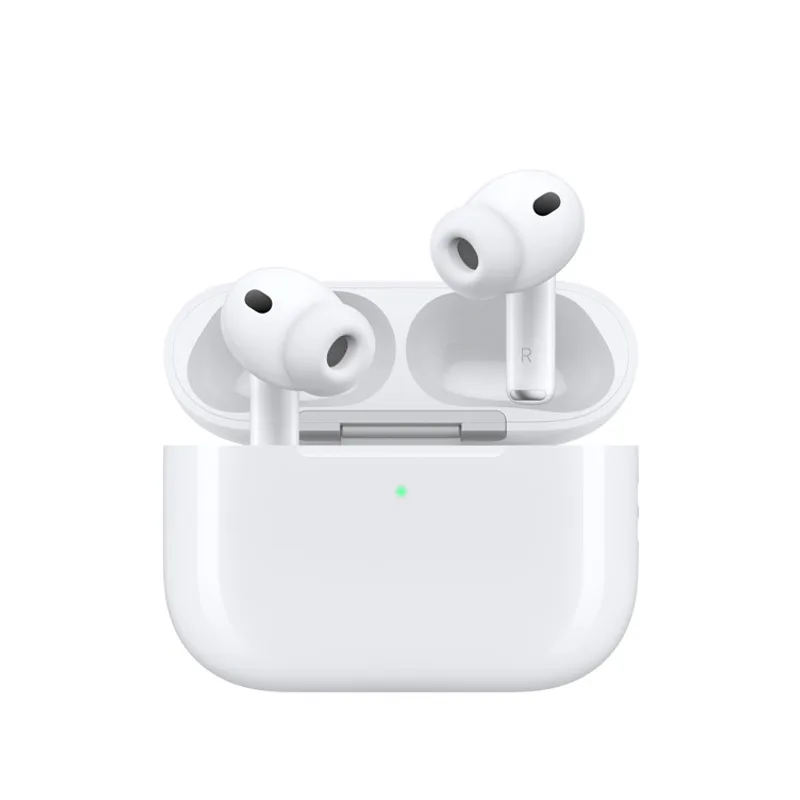
Apple AirPods Pro 3
Pros
- Adaptive ANC with real-time adjustment based on ear seal and environment
- Live Translation feature handles multilingual calls in real time
- USB-C and MagSafe wireless charging on the case
- Heart Rate Sensing adds wellness tracking without a separate wearable
- FDA-certified Hearing Aid feature — useful for extended call hours
- Routinely sells for $199–$200 on Amazon, well under the $249 MSRP
Cons
- Full feature set limited to Apple ecosystem (iPhone, iPad, Mac)
- 6-hour per-charge battery requires case management on long call days
- Spatial audio and Adaptive Transparency are less useful on a desk setup
The AirPods Pro 3 launched in September 2025 at $249 but now routinely sells at $199–$200 on Amazon — sometimes dipping to $184 during sales. That pricing shift makes them the best-value premium earbud for anyone already using a Mac and iPhone.
The H2 chip’s Adaptive ANC continuously adjusts based on ear seal quality and ambient noise level rather than applying a fixed filter. For remote workers whose environments shift through the day — quiet morning, louder afternoon — that adaptive approach maintains consistent isolation without manual adjustments. The Transparency Mode pauses audio and drops volume automatically when you start speaking, which is practically useful during home office interruptions.
Live Translation handles multilingual calls in real time, useful for distributed teams with international colleagues. The FDA-certified Hearing Aid feature is medically relevant for workers with moderate hearing loss. Heart Rate Sensing via the in-ear optical sensor adds wellness tracking without a separate device.
The case supports USB-C wired charging and MagSafe wireless. For Mac users, auto-switching between iPhone, iPad, and Mac is near-instant. Windows and Android users get functional Bluetooth earbuds with strong ANC and good call quality, but lose the ecosystem features that justify the Apple price.
Buy this if: You’re running Mac and iPhone for work. Instant switching, Siri, and Find My are genuinely better on Apple hardware than anything a competitor offers — and at $199 street, the value case is strong.
Skip this if: You’re primarily on Windows or Android. Paying for AirPods-tier hardware to get consumer-grade Bluetooth earbuds (without the ecosystem features activating) is poor value.
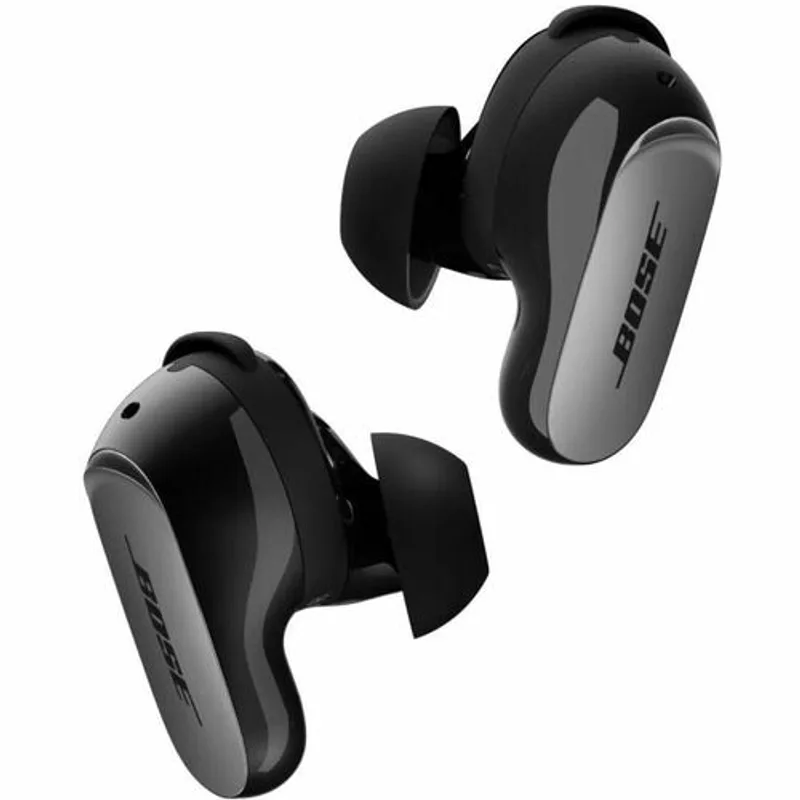
Bose QuietComfort Ultra Earbuds 2nd Gen
Pros
- SpeechClarity AI filters background noise and wind from your outgoing mic signal
- CustomTune calibrates audio output to your ear canal shape on first wear
- Wireless charging case included — no separate purchase needed
- Bose's ANC consistently rated best-in-class across independent reviews
- Street price around $249 — down from $299 MSRP
Cons
- 6-hour earbud battery is the shortest per-charge runtime in this roundup
- Larger earbud form factor than competitors — fit is polarizing
- No bone conduction mic or enterprise call platform certifications
Bose’s second-generation QC Ultra Earbuds added two meaningful features to an already strong ANC chassis: SpeechClarity, which applies AI processing to the outgoing mic signal during calls to isolate voice and suppress background noise, and CustomTune, which calibrates playback to your ear canal geometry on first wear. Wireless charging was added to the case — previously a $49 separate purchase.
Street price settled around $249 — down from the $299 MSRP — bringing it in line with the AirPods Pro 3 and Samsung Buds4 Pro tier.
For remote workers, SpeechClarity is the key feature. It works on what callers hear, not just what you hear. Owner reports describe noticeably cleaner voice quality on the receiving end in noisy environments. Combined with the already strong listening ANC, both sides of a call get cleaner audio than most earbuds provide.
The weak point is battery: 6 hours per earbud with ANC active, the shortest per-charge runtime in this roundup. The case adds 18 hours, and wireless charging reduces friction for mid-day case top-ups. The earbud body is larger than competitors — fit is genuinely polarizing depending on ear canal shape.
Buy this if: Pure noise isolation and AI-enhanced call mic processing are the priorities, and 6-hour bud battery is manageable with the included wireless charging case.
Skip this if: Your call blocks regularly run past 6 hours without breaks. The Jabra or Sony give longer per-charge runtime with equally strong call audio.
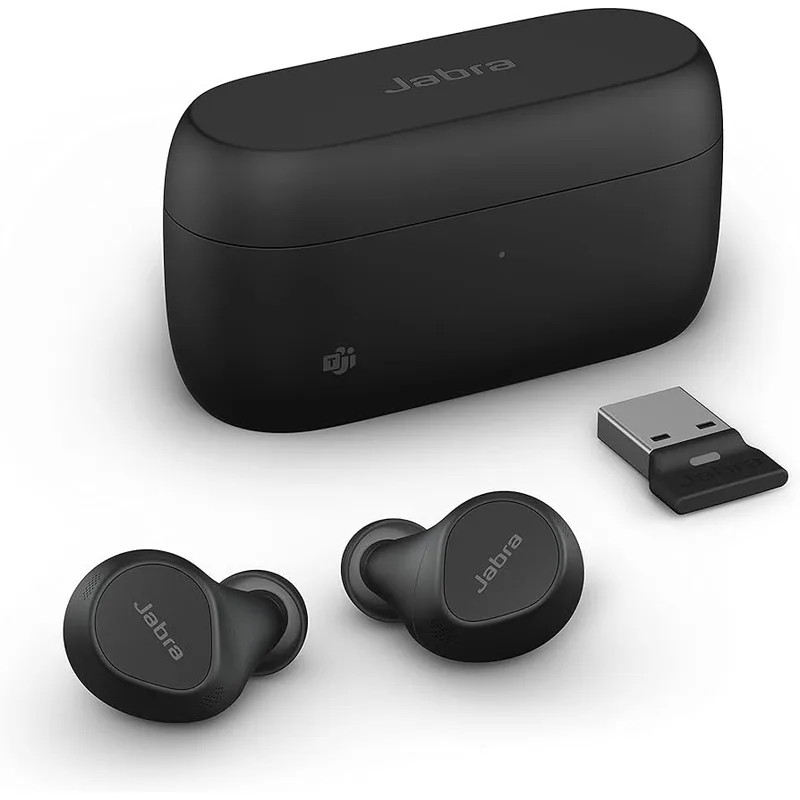
Jabra Evolve2 Buds
Pros
- Four-mic array plus bone conduction sensor captures voice even in very loud spaces
- Microsoft Teams, Zoom, and Google Meet certified for one-touch meeting controls
- Included USB dongle provides reliable low-latency wireless for desktop connections
- Industry-leading 41-hour total battery covers the longest remote work weeks
- Fast charge — 5 minutes delivers 1 hour of playback
Cons
- $269 starting price does not include the wireless charging pad (add $35)
- ANC quality trails Sony and Bose for ambient sound isolation
- Music listening experience is secondary — tuned for call clarity first
The Jabra Evolve2 Buds were built for enterprise remote work, not adapted from a consumer product. That distinction shows in every hardware decision. The four-microphone array includes a bone conduction sensor — a contact mic that reads jaw vibration during speech. Two separate voice signal sources (acoustic mics and jaw movement) keep voice capture reliable in environments loud enough to overwhelm acoustic mics alone.
Microsoft Teams, Zoom, and Google Meet certified status means hardware buttons map to meeting controls — join, mute, volume — that work natively without configuration. IT departments can manage Evolve2 Buds fleets through Jabra Direct software. For organizations deploying remote workers at scale, these earbuds are the standard.
Battery leads this entire roundup: 8 hours per earbud with ANC active, 33 hours in the case, 41 hours total. Fast charge delivers 1 hour of use from 5 minutes of charging. The included USB dongle provides dedicated low-latency wireless for desktop computers — useful for Windows users who encounter Bluetooth audio inconsistency with large headphones or other audio devices.
Starting price of $269 covers the model without wireless charging. Add $35 for the wireless charging pad. For individual users, ANC quality trails Sony and Bose — these earbuds optimize for mic performance and call integration, with music listening as a secondary concern.
Buy this if: Your work runs through Microsoft Teams on Windows, or you’re deploying and managing audio devices for a remote team. The bone conduction mic and hardware certifications are worth the premium for call-heavy roles.
Skip this if: Pure ANC depth for focus blocks is the priority. The Sony or Bose options isolate better for ambient noise blocking.
Samsung Galaxy Buds4 Pro
Pros
- Dual-driver setup (dynamic + planar) delivers richer audio than single-driver earbuds
- Adaptive ANC 2.0 attenuates ~84% of noise — nearly on par with Sony XM6
- IP57 rating resists dust and water submersion — most durable in this roundup
- Bluetooth 6.1 provides the most stable wireless connection here
- Live Translation handles multilingual calls natively
Cons
- Full Galaxy AI features require a Samsung Galaxy phone for full activation
- 6-hour per-charge battery with ANC is average for the $249 price point
- Pinch gesture controls take time to adjust to for new users
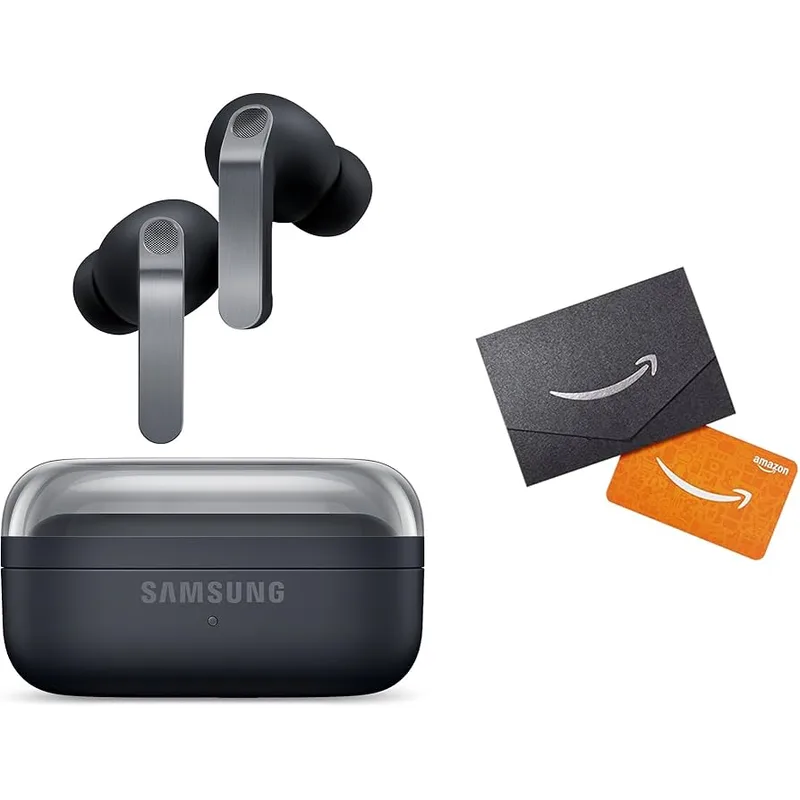
Samsung released the Galaxy Buds4 Pro in March 2026 as the current flagship, replacing the Buds3 Pro. The headline upgrade is the dual-driver configuration — an 11mm dynamic driver paired with a 5.4mm planar driver — delivering more detailed audio separation than the single-driver earbuds in this roundup. Samsung claims the woofer’s effective area is nearly 20% larger than the Buds3 Pro generation.
Adaptive ANC 2.0 attenuates approximately 84% of ambient noise across the audible spectrum in independent testing — close to AirPods Pro performance and just behind the Sony XM6. Bluetooth 6.1 (the newest standard here) provides measurably more stable wireless connections than Bluetooth 5.x, which matters for desktop users who have experienced wireless audio drops.
The IP57 rating resists dust and water submersion to 3 feet for 30 minutes — the most durable option in this roundup. Live Translation handles multilingual calls natively. Battery is 6 hours with ANC active and 26 hours with the case for 32 hours total.
At $249, the Buds4 Pro sits at the same price as the Bose QC Ultra 2nd Gen. The Buds4 Pro wins on audio quality and Bluetooth stability; the Bose wins on pure ANC depth and call mic AI processing. The limitation is ecosystem: full Galaxy AI features require a Samsung Galaxy phone.
For reference, the previous-gen Galaxy Buds3 Pro now sells at $150–$175 following the Buds4 Pro launch. If budget is the constraint and you’re in the Samsung ecosystem, the Buds3 Pro at that price delivers solid ANC and capable call performance.
Buy this if: You’re in the Samsung Galaxy ecosystem and want the current-generation flagship. The dual-driver audio, ANC 2.0, and IP57 durability are genuine differentiators.
Skip this if: You’re not using a Samsung Galaxy phone and want the full AI feature set to activate. Platform-neutral users get better value from the Sony XM6 or Jabra.
What to Look for in Remote Work Earbuds
ANC quality vs. call mic processing. Listening ANC and call mic processing are separate systems. An earbud that blocks ambient sound from your ears doesn’t automatically send clean audio to callers. The Jabra uses bone conduction for call mic reliability; the Bose uses AI SpeechClarity processing; the Sony uses beamforming. Match the technology to your primary use: deep focus isolation (Sony, Bose) vs. call-heavy enterprise work (Jabra).
Battery per charge, not total. Marketing emphasizes total battery including case recharges. What actually determines your workday experience is per-charge earbud runtime: 6 hours (Bose, Apple, Samsung) vs. 8 hours (Sony, Jabra). If daily call schedules run 5+ hours without a break, 6-hour earbuds require active case management.
Platform integration. Apple users get substantially better value from AirPods Pro 3 than Sony or Bose on Apple hardware: instant switching, Siri, Find My. Samsung Galaxy users benefit similarly from the Buds4 Pro. Windows and Android users without Samsung hardware get the best platform-neutral experience from the Sony XM6 or Jabra Evolve2 Buds.
Fit and long-wear comfort. Earbuds worn 8+ hours require a stable, light fit. Sony’s 11% weight reduction in the XM6 addresses this directly. The Jabra wing-tip stabilizer suits some users well but can cause pressure over 6+ hours for others. Bose and Apple use pressure-fit tips without wing stabilizers. If previous earbuds gave you fit issues, verify the tip design before committing.
Multipoint connection. Most modern earbuds support two simultaneous Bluetooth devices. This matters if you switch between laptop and phone throughout the day. The Sony XM6, Jabra, and Bose all support reliable two-device multipoint. Verify your specific device combination works.
Earbuds vs. Over-Ear Headphones for Remote Work
Earbuds win on comfort for extended wear in three specific situations:
- Heat: Full ear cups trap warmth during long calls. Earbuds don’t.
- Glasses wearers: Over-ear cups create pressure on glasses frames over hours of use. Earbuds eliminate this.
- Video call appearance: Earbuds are visually neutral on camera; large over-ear headphones aren’t.
The trade-off is ANC depth: over-ear headphones block more sound passively before ANC activates. The Sony WH-1000XM6 over-ear headphones outperform the WF-1000XM6 earbuds in very loud environments. For a home office with moderate ambient noise, the difference is marginal — and earbuds win on comfort.
FAQ
Are noise-cancelling earbuds worth it for remote work?
For call-heavy roles — more than 3 hours of video calls daily — quality earbuds are the highest-return audio investment in a remote setup. ANC reduces the mental effort of filtering background noise. A good call mic means callers hear your voice rather than your environment. Both factors reduce fatigue on long call days. The Jabra Evolve2 Buds and Sony WF-1000XM6 are specifically engineered for this use case.
Which earbuds are best for Microsoft Teams calls?
The Jabra Evolve2 Buds are the certified choice for Teams environments — hardware buttons map directly to Teams call controls and the software integration is Microsoft-validated. For individuals not in a managed Teams deployment, the Sony WF-1000XM6 and Bose QC Ultra 2nd Gen both perform well on Teams calls without hardware certification.
How long should earbuds last for a full remote workday?
A typical remote workday involves 6–9 hours of combined audio use: calls, focus music, and break audio. The Sony WF-1000XM6 and Jabra Evolve2 Buds offer 8 hours per charge with ANC active — enough for most full days. The Bose, Apple, and Samsung options top out at 6 hours per charge. If your days regularly run past 6 hours of continuous audio, prioritize the Sony or Jabra.
Can I use noise-cancelling earbuds with any video call platform?
Yes. ANC earbuds work as standard Bluetooth audio devices with Zoom, Google Meet, Teams, WebEx, and FaceTime. The distinction is between standard function and certified integration: Jabra Evolve2 Buds have hardware controls mapped to specific platforms; other earbuds rely on in-app software controls.
Should I buy Samsung Galaxy Buds3 Pro or Buds4 Pro?
The Buds4 Pro (current gen, $249) offers better ANC, dual-driver audio, Bluetooth 6.1, and IP57 durability. The Buds3 Pro (previous gen, $150–$175) delivers capable ANC and good call quality at a lower price. If $100 matters in your budget, the Buds3 Pro is still a solid choice. If you’re spending $249, go with the Buds4 Pro.
What’s the difference between Sony WF-1000XM5 and XM6?
The XM6 uses the newer QN3e processor (vs. QN2e in the XM5), adds a fourth microphone per earbud, reduces the earbud body by 11%, and upgrades to 32-bit audio processing with LDAC. The XM5 remains available at lower prices but lacks the call mic improvements that matter most for remote work. For anyone buying new in 2026, the XM6 is the better purchase.
Conclusion
The Sony WF-1000XM6 ($299) is the top pick for 2026. The February launch delivered better ANC hardware, a stronger call mic, and a slimmer fit — and the street price has settled $30 below launch. For call-heavy remote work without ecosystem constraints, it’s the clear choice.
For Apple users, the AirPods Pro 3 at $199 street is the better call. Instant Mac switching, Siri, and Find My are genuinely better on Apple hardware than any competitor provides — and $100 less than the Sony.
For Teams-heavy enterprise environments, the Jabra Evolve2 Buds are the professional standard: bone conduction mic, hardware call controls, and 41-hour total battery. Nothing in the consumer category matches them for call-specific performance.
The Bose QC Ultra 2nd Gen ($249) is the right pick if pure noise isolation and AI-enhanced call mic processing are the priority. The 6-hour battery is the trade-off.
The Samsung Galaxy Buds4 Pro ($249) brings the current-generation flagship with dual-driver audio and IP57 durability — the best Android pick for Samsung Galaxy users who want the full AI feature set.
Detailed Reviews
Sony WF-1000XM6
Pros
- QN3e chip delivers 25% stronger noise cancellation than the XM5 generation
- Four mics per earbud with beamforming isolates voice clearly on calls
- 11% slimmer body than XM5 — noticeably more comfortable for all-day wear
- Multipoint connects to laptop and phone simultaneously with fast switching
- 32-bit audio processing with LDAC support for lossless audio quality
Cons
- Street price of $299 is the highest in this roundup
- 8-hour per-charge battery, while good, still trails the Jabra's 41-hour total
- Large charging case compared to the AirPods Pro 3 case
Apple AirPods Pro 3
Pros
- Adaptive ANC with real-time adjustment based on ear seal and environment
- Live Translation feature handles multilingual calls in real time
- USB-C and MagSafe wireless charging on the case
- Heart Rate Sensing adds wellness tracking without a separate wearable
- FDA-certified Hearing Aid feature — useful for extended call hours
- Routinely sells for $199–$200 on Amazon, well under the $249 MSRP
Cons
- Full feature set limited to Apple ecosystem (iPhone, iPad, Mac)
- 6-hour per-charge battery requires case management on long call days
- Spatial audio and Adaptive Transparency are less useful on a desk setup
Bose QuietComfort Ultra Earbuds 2nd Gen
Pros
- SpeechClarity AI filters background noise and wind from your outgoing mic signal
- CustomTune calibrates audio output to your ear canal shape on first wear
- Wireless charging case included — no separate purchase needed
- Bose's ANC consistently rated best-in-class across independent reviews
- Street price around $249 — down from $299 MSRP
Cons
- 6-hour earbud battery is the shortest per-charge runtime in this roundup
- Larger earbud form factor than competitors — fit is polarizing
- No bone conduction mic or enterprise call platform certifications
Jabra Evolve2 Buds
Pros
- Four-mic array plus bone conduction sensor captures voice even in very loud spaces
- Microsoft Teams, Zoom, and Google Meet certified for one-touch meeting controls
- Included USB dongle provides reliable low-latency wireless for desktop connections
- Industry-leading 41-hour total battery covers the longest remote work weeks
- Fast charge — 5 minutes delivers 1 hour of playback
Cons
- $269 starting price does not include the wireless charging pad (add $35)
- ANC quality trails Sony and Bose for ambient sound isolation
- Music listening experience is secondary — tuned for call clarity first
Samsung Galaxy Buds4 Pro
Pros
- Dual-driver setup (dynamic + planar) delivers richer audio than single-driver earbuds
- Adaptive ANC 2.0 attenuates ~84% of noise — nearly on par with Sony XM6
- IP57 rating resists dust and water submersion — most durable in this roundup
- Bluetooth 6.1 provides the most stable wireless connection here
- Live Translation handles multilingual calls natively
Cons
- Full Galaxy AI features require a Samsung Galaxy phone for full activation
- 6-hour per-charge battery with ANC is average for the $249 price point
- Pinch gesture controls take time to adjust to for new users