HyperX shipped the Cloud Alpha 2 in early 2026 with simultaneous 2.4GHz and Bluetooth wireless — a feature that lets you keep game audio running on your PC while phone calls route through Bluetooth without any manual switching. It’s a direct response to the remote worker use case, and it’s part of a broader trend: gaming headset manufacturers are actively designing their flagship products for people who use the same headset for a Zoom call at 10am and a gaming session at 8pm.
The five headsets compared here represent the strongest options across that crossover market in 2026, from the HyperX Cloud Alpha Wireless at $120-$150 to the SteelSeries Arctis Nova Pro Wireless at $275-$349. Each was selected based on verified Amazon availability, active listing status, manufacturer-published specifications, and real-world owner feedback on mic performance in Teams and Zoom contexts.
Quick Comparison
| Headset | Mic Type | Battery | Wireless | ANC | Price |
|---|---|---|---|---|---|
| Logitech G PRO X 2 Lightspeed | Blue VO!CE PRO cardioid | 50 hrs | 2.4GHz + BT | No | $179.99-$219.99 as of Oct 18, 2026 |
| SteelSeries Arctis Nova Pro Wireless | ClearCast Gen 2 bidirectional | Infinite (hot-swap) | 2.4GHz + BT | Yes | $299.99 as of Oct 18, 2026 |
| HyperX Cloud Alpha Wireless | Noise-canceling cardioid | 300 hrs | 2.4GHz only | No | $78.77-$107.99 as of Oct 18, 2026 |
| Razer BlackShark V2 Pro (2026) | Super wideband 9.9mm | 70 hrs | 2.4GHz + BT | No | $150-$200 |
| HyperX Cloud Alpha 2 | 10mm boom | 250 hrs | 2.4GHz + BT simultaneous | No | $169.99-$199.99 as of Oct 18, 2026 |
The Picks
1. Logitech G PRO X 2 Lightspeed — Best for Work Calls
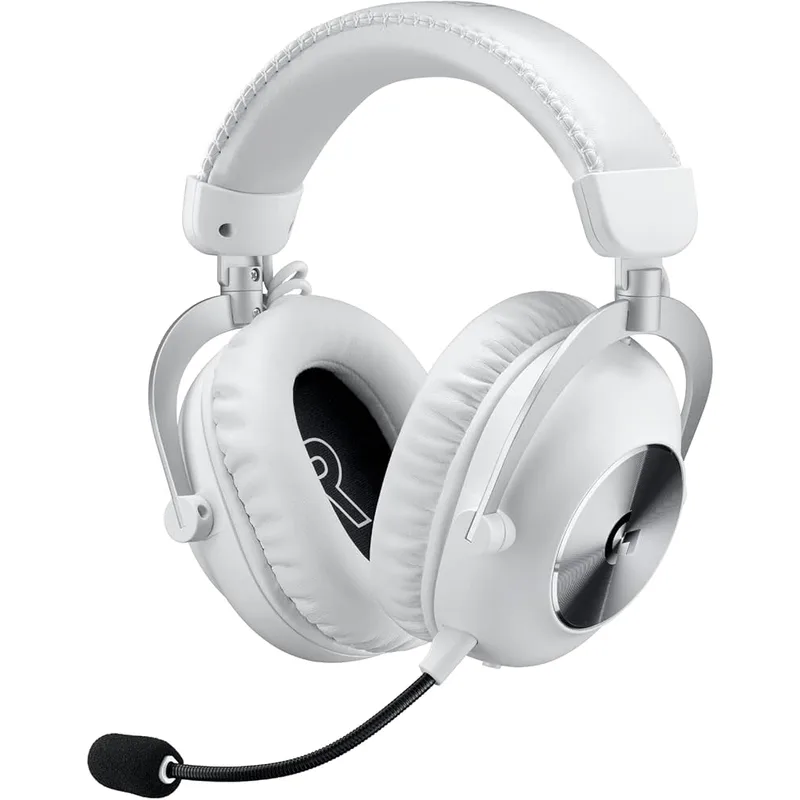
Logitech G PRO X 2 Lightspeed
Pros
- Blue VO!CE mic filters (noise reduction, equalization, compressor) are applied in real-time in Logitech G HUB — owner reports on Teams and Zoom describe voice isolation that approaches dedicated USB microphones, which is the bar that matters for daily work calls
- 50mm Graphene drivers reproduce voice frequencies with low distortion at listening levels typical of a 6-8 hour work session — the graphene diaphragm is stiffer than standard mylar and holds its shape under sustained output, which owner feedback links to consistent clarity over long sessions
- Three simultaneous connection modes (LIGHTSPEED 2.4GHz, Bluetooth, USB-C/USB-A) let you stay connected to a PC via LIGHTSPEED while taking a phone call over Bluetooth — practical for remote workers who toggle between devices throughout the day
- 50 hours of wireless battery covers a full work week on a single charge at typical office use — the estimate is real-world consistent per owner reports, not a spec-sheet maximum based on minimal volume
- At $140-$160 in 2026, the G PRO X 2 has dropped significantly from its $249 launch price — the price reduction makes it the strongest value proposition for users who need work-call-first audio and occasionally game in the evening
Cons
- Logitech G HUB software is required to access Blue VO!CE microphone processing — without it, the mic works but defaults to unprocessed output, which reduces call quality advantage over simpler headsets
- 345g is noticeable over 4+ hour sessions compared to lighter options like the SteelSeries Arctis Nova Pro (338g) or HyperX Cloud Alpha (309g) — the difference is small but registers during long afternoon calls
- LIGHTSPEED USB receiver is required for low-latency 2.4GHz wireless — it occupies a USB-A port, which matters on MacBooks and USB-C-only laptops that require an adapter
The G PRO X 2 earns the top position for a specific reason: Blue VO!CE microphone processing. In Logitech G HUB, you get real-time noise reduction, equalization, de-essing, and a compressor — all applied to the mic signal before it reaches Teams or Zoom. Owner reports on call platforms consistently describe voice isolation quality that approaches dedicated USB microphones costing $50-$100 more. For a remote worker who wants one piece of hardware for gaming and video conferencing, that microphone performance advantage matters.
The 50mm Graphene drivers contribute to the audio side. Graphene diaphragms are stiffer than standard mylar, which reduces distortion at sustained output levels — the listening experience holds up over long sessions in a way that softer driver materials don’t. At desk listening distances, the difference from the Razer BlackShark’s bio-cellulose drivers is subtle, but owner feedback favors the G PRO X 2 slightly for vocal clarity in podcast and meeting playback.
Three connection modes (LIGHTSPEED 2.4GHz, Bluetooth 5.1, USB-C) make device switching practical. The LIGHTSPEED 2.4GHz handles your PC with minimal latency, Bluetooth covers phone calls independently, and USB-C provides a wired fallback for travel or shared-use scenarios. The 50-hour battery covers a full work week without charging.
The price trajectory matters here. The G PRO X 2 launched at $249 and has dropped to $140-$160 in 2026 — the microphone and connection technology that justified $249 is now available for less than the Razer BlackShark V2 Pro in many listings.
Who should buy this: Remote workers whose primary use case is video call quality, with gaming as a secondary use. The Blue VO!CE mic processing is the differentiating feature and the main reason to choose this over the Cloud Alpha Wireless.
2. SteelSeries Arctis Nova Pro Wireless — Best Premium
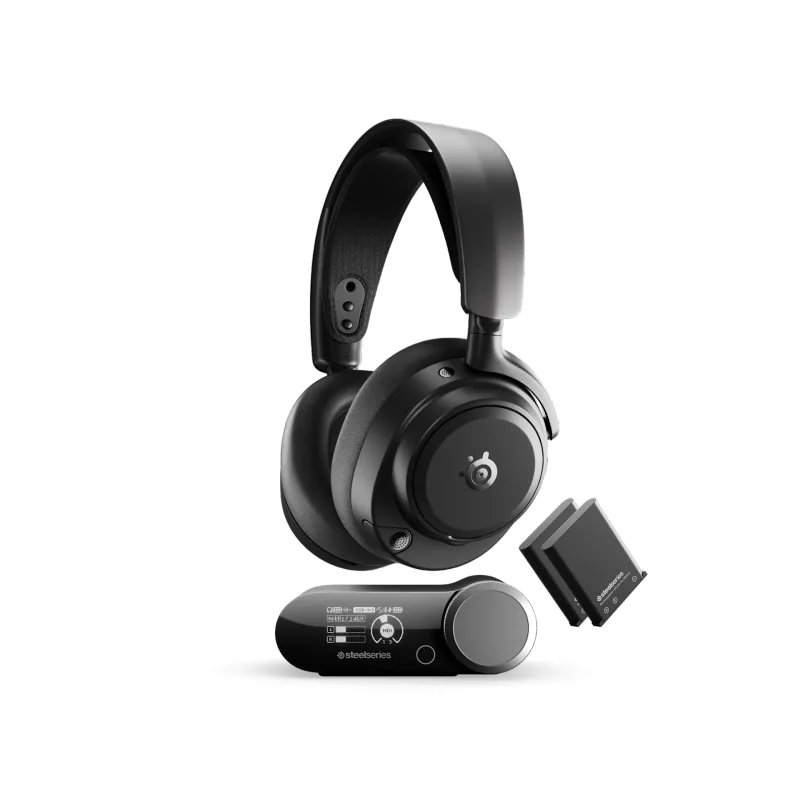
SteelSeries Arctis Nova Pro Wireless
Pros
- Hot-swap dual battery system (Infinity Power System) eliminates the concept of running out of battery mid-call — while one battery is in use, the spare charges in the headset's base station, and swapping takes 5 seconds; this is the only wireless gaming headset on this list where battery life is not a variable
- Active noise cancellation reduces consistent background noise — HVAC hum, keyboard clicks, environmental sound — which reduces listener fatigue during long meetings; owner reports describe a noticeable background sound reduction compared to passive-only isolation
- ClearCast Gen 2 bidirectional microphone uses a second mic capsule to isolate background noise before transmission — based on owner feedback in Teams and Zoom contexts, the bidirectional design outperforms standard cardioid mics at rejecting consistent background room noise
- Simultaneous dual wireless lets you monitor game audio on 2.4GHz while phone calls route through Bluetooth — the GameDAC Gen 2 base station manages this mixing in hardware, with no software configuration required
- Retractable mic mechanism (no dangling cable when not in use) is practical for users who alternate between calls and focus-work listening — the mic folds flush with the headset rather than requiring removal and storage
Cons
- At $275-$349, this is a significant premium over the Logitech G PRO X 2 at $140-$160 — the ANC, dual wireless, and infinite battery are real advantages, but only for users who genuinely use all three features
- Base station requires desk space and a USB connection — the charging dock and GameDAC are part of the system, but they add physical footprint to a desk that may already be crowded
- ANC quality is effective for constant-source noise (HVAC, fan noise) but less effective on variable or impulsive sounds (construction, loud coworkers in a shared space) — users expecting noise cancellation comparable to Sony or Bose headphones will find gaming-class ANC slightly behind
The Arctis Nova Pro Wireless is the only headset on this list that solves the two most common work-from-home audio frustrations simultaneously: battery anxiety and background noise. The Infinity Power System uses two swappable batteries — while one is depleted and charging in the base station, you swap in the charged spare. Total wireless operation is unlimited. For remote workers on 7-8 hour meeting-heavy days, the elimination of battery management is worth more than it sounds.
Active noise cancellation addresses background noise from a different angle than microphone processing. The ANC reduces what you hear — HVAC, fan noise, street sound — which reduces listening fatigue over long calls. ClearCast Gen 2 uses a secondary mic capsule for bidirectional noise rejection on the transmission side, reducing what your meeting participants hear. Owner feedback in Teams and Zoom describes consistently clean incoming and outgoing audio even in home offices near busy streets or with loud climate control.
The GameDAC Gen 2 base station manages dual wireless mixing in hardware — 2.4GHz game audio and Bluetooth call audio route through the base station simultaneously, and the volume balance between sources is adjusted via the base station’s analog dial. No software menu navigation required during a call.
At $275-$349, this is the most expensive option here. The premium is justified for heavy conference users who work long days, want ANC for focus periods, and need reliable cross-device switching. For someone who games occasionally and cares primarily about battery-free operation, the value case is clear.
Who should buy this: Remote workers with heavy meeting loads who need ANC for focus periods and want unlimited battery operation. Also the best option for anyone who regularly works from variable environments (cafes, offices, travel) where background noise varies.
3. HyperX Cloud Alpha Wireless — Best Value
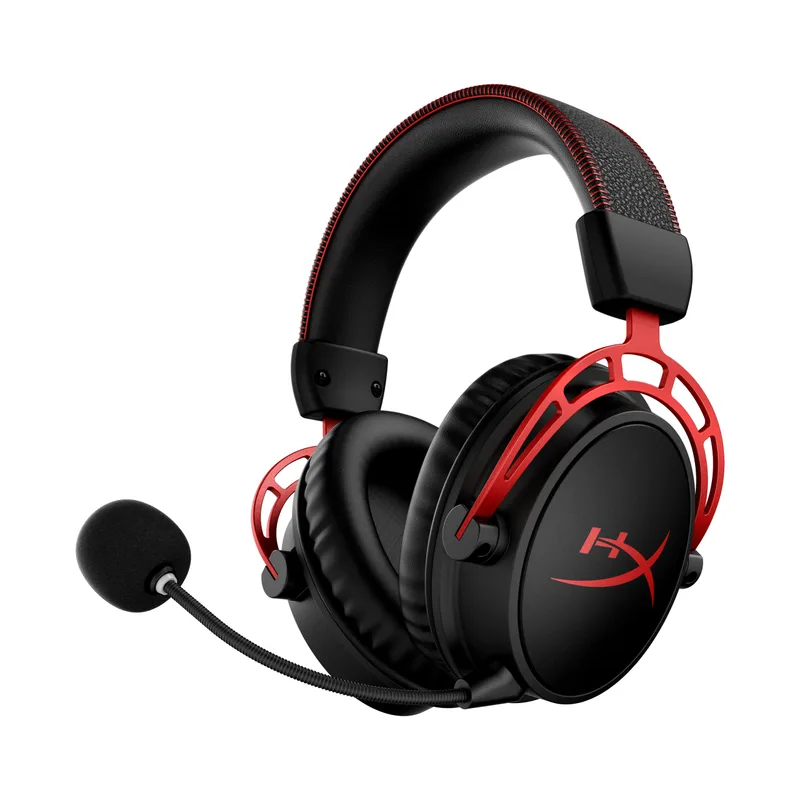
HyperX Cloud Alpha Wireless
Pros
- 300-hour wireless battery life is the specification that makes this headset different from everything else in this price range — charging every 12.5 days at 24 hours of daily use means battery management is eliminated as a variable for work-from-home users
- 309g is the lightest headset on this list, and the difference from 338-345g competitors is perceptible during 6-8 hour work sessions — lighter clamping force from the aluminum frame also contributes to lower all-day fatigue
- Dual chamber driver design separates bass reproduction from mid and high frequencies — the separation means voice frequency reproduction (300Hz-3kHz) isn't competing with bass content for driver excursion, which owner reports link to cleaner voice audio on calls
- Memory foam leatherette earpads maintain contact seals around ears consistently — the passive isolation that results helps call audio stay clear in moderately noisy environments without requiring ANC
- At $120-$150, this is the lowest-priced genuinely wireless option on this list — and the per-feature value (battery life per dollar, comfort per dollar) is the highest of any headset reviewed here
Cons
- 2.4GHz wireless only — no Bluetooth means no simultaneous phone audio, no switching between a laptop and a phone for different call platforms, and no direct connection to mobile-only Zoom or Teams instances
- No active noise cancellation — background noise is managed purely through passive isolation from the earcup seal, which works in quiet home offices but is insufficient for shared or open workspaces
- PC and Mac only — no native PS5 or console connectivity, which limits the gaming crossover value compared to the Razer BlackShark V2 Pro or Logitech G PRO X 2
The Cloud Alpha Wireless’s defining specification is 300 hours of battery life, and the specification is accurate per owner reports. At a 10-hour workday, that’s 30 working days on a single charge. Battery management becomes irrelevant. No charging reminders, no mid-call power-outs, no keeping a cable nearby.
The tradeoff for 300-hour battery is connection mode: 2.4GHz wireless only, PC and Mac only. No Bluetooth means no independent phone call routing — if your phone rings during a Teams session, you either answer on speakerphone or take the headset off. For users who primarily work on a desktop or laptop and route all calls through a computer, this limitation is invisible. For users who frequently switch between a PC and a phone for different call apps, it’s a real constraint.
Dual chamber driver design separates bass from midrange and high frequencies, which improves voice clarity during call monitoring at moderate volumes. The 50mm chamber configuration keeps voice-frequency reproduction isolated from any bass-forward music playing in the background — a meaningful feature for users who background-listen during work and then join a call without adjusting settings.
At 309g, the Cloud Alpha Wireless is the lightest headset on this list, and the aluminum frame distributes the weight well. Owner reports consistently describe comfort over 6+ hour sessions. At $120-$150, it’s also the lowest-priced wireless option here, and the value per feature (battery life, comfort, build quality) is the highest of any headset reviewed.
Who should buy this: Remote workers on primarily PC-based call platforms (Teams, Zoom via browser, Discord) who want the lowest-effort wireless option and aren’t frequently switching to phone-based calls.
4. Razer BlackShark V2 Pro (2026) — Best Versatility
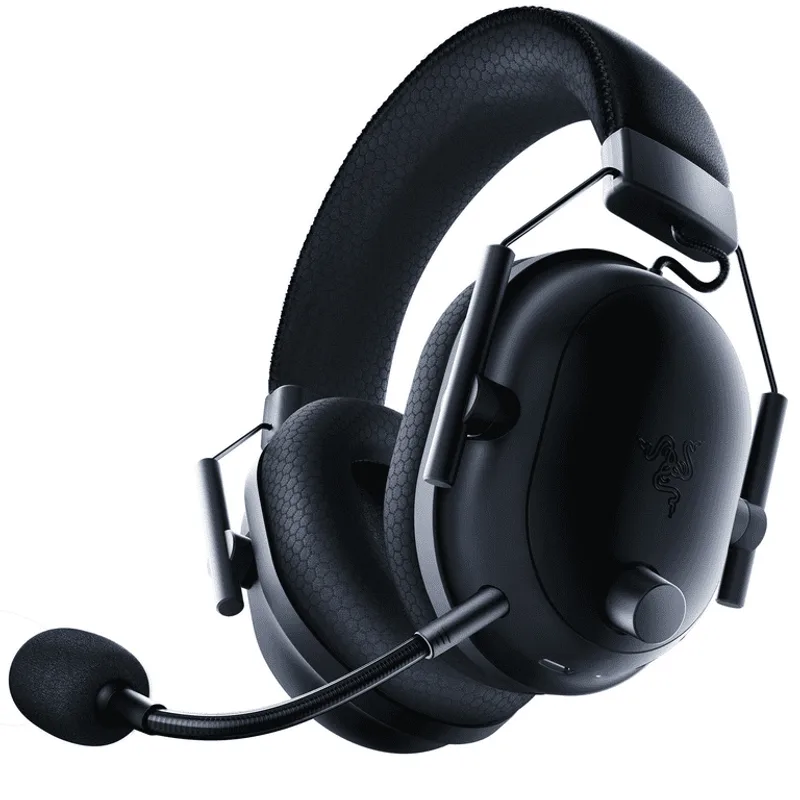
Razer BlackShark V2 Pro (2023)
Pros
- Super wideband microphone captures 200Hz-16kHz frequency range — standard narrowband mics used in most headsets capture 300Hz-3.4kHz; the wider capture range results in voice audio that sounds less telephone-like and more natural on Teams and Zoom calls per owner feedback
- 70-hour battery with Bluetooth 5.2 dual-mode connectivity covers more call scenarios than the HyperX Cloud Alpha Wireless: the Razer works on phones and tablets natively while the HyperX requires a USB receiver
- HyperSpeed 2.4GHz plus Bluetooth 5.2 enables the same device-switching versatility as the Logitech G PRO X 2 — PC audio on 2.4GHz while phone calls route via Bluetooth — but at $150-$200 versus the G PRO X 2's current $140-$160 pricing
- Bio-cellulose driver material produces low distortion at high SPL — owner reports on gaming use describe accurate positional audio, and the same low-distortion characteristic benefits voice call monitoring at moderate listening levels
- USB-C charging is now expected at this price point, and the V2 Pro delivers — plus the charging cable doubles as a USB wired audio connection when wireless isn't available
Cons
- At $150-$200, the V2 Pro overlaps the Logitech G PRO X 2's price range while delivering a less specialized work call microphone — the G PRO X 2's Blue VO!CE processing is more configurable for office audio scenarios
- No active noise cancellation — passive isolation from the plush earcups is good, but it doesn't match what the SteelSeries Arctis Nova Pro Wireless provides in noisy environments
- Razer Synapse software for mic configuration is heavier than Logitech G HUB in system resource usage — owner reports occasionally mention background CPU usage, though this is typically a minor issue on modern hardware
The V2 Pro’s defining advantage for work calls is its super wideband microphone. Standard headset mics capture 300Hz-3.4kHz — the narrowband range optimized for telephony. The V2 Pro’s 9.9mm condenser captures 200Hz-16kHz. In practice on Teams and Zoom, the wider capture range produces voice audio that sounds noticeably less like a phone call and more like in-person speech. Owner reports on call quality consistently rank it among the better gaming headset mics for professional audio.
The 2026 refresh added Bluetooth 5.2 alongside Razer’s HyperSpeed 2.4GHz wireless, which is the same dual-wireless capability as the Logitech G PRO X 2 and SteelSeries Arctis Nova Pro. A PC stays connected via HyperSpeed while phone calls route through Bluetooth — both audio streams are accessible without manual switching. The 70-hour battery covers the work week comfortably.
Triforce bio-cellulose drivers are lighter and stiffer than standard polypropylene diaphragms. Bio-cellulose construction reduces resonance and distortion at typical listening levels, with owner feedback favoring the V2 Pro’s tonal balance for music and game audio alongside call use.
At $150-$200, the V2 Pro overlaps the Logitech G PRO X 2’s 2026 price range. The Razer wins on platform versatility (PS5 and Nintendo Switch 2 support is native, not just USB-receiver-based) and battery life at 70 hours versus 50 for the G PRO X 2. The Logitech wins on configurable mic processing via Blue VO!CE. Both are strong, and which matters more depends on your secondary use.
Who should buy this: Remote workers who also use a PS5 or Nintendo Switch and want one headset for both platforms, or who prefer a microphone that captures voice audio with more natural frequency extension.
5. HyperX Cloud Alpha 2 — Newest 2026 Pick
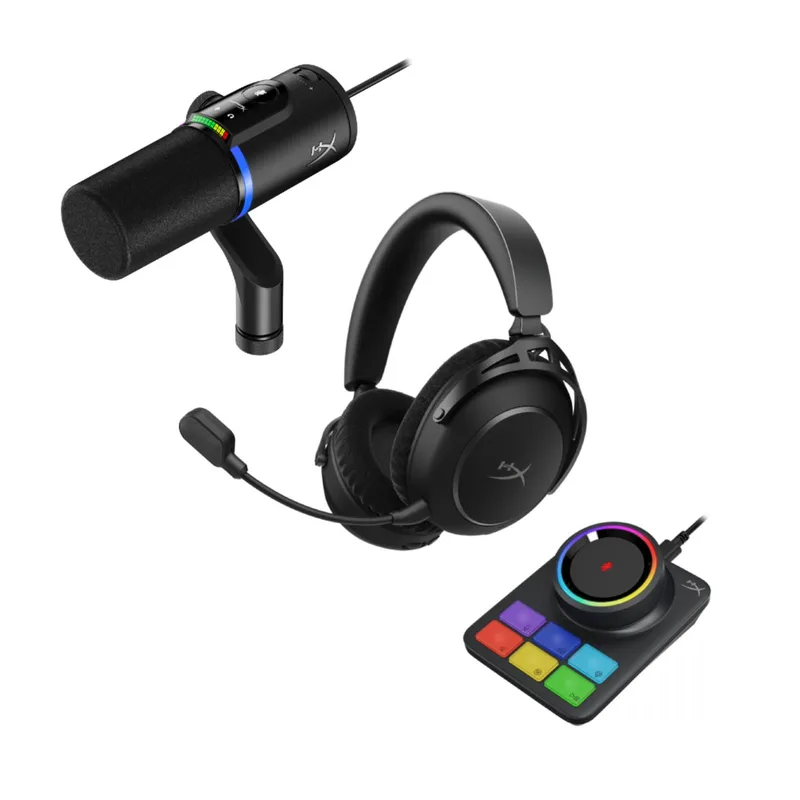
HyperX Cloud Alpha 2
Pros
- Simultaneous 2.4GHz and Bluetooth connectivity is the key 2026 addition — you can monitor game audio on 2.4GHz and receive phone calls over Bluetooth at the same time, with audio mixing handled by the base station; this directly addresses the remote worker multi-device problem
- 250-hour battery life is the second-longest spec on this list (behind the original Cloud Alpha Wireless at 300 hours) — in practice, a 10-hour work day at normal use means charging roughly every three weeks
- 53mm dual chamber drivers are physically larger than the 50mm drivers in most competitors — larger driver surface area supports lower frequency extension, and HyperX's dual chamber implementation separates bass reproduction from mids/highs to reduce interference
- LED mute indicator on the mic is a simple feature that eliminates accidental hot mic situations on work calls — a status indicator visible to the user without checking a software widget
- Launched in early 2026, the Cloud Alpha 2 is the most recently designed headset on this list — the base station includes programmable RGB and macro buttons that can control call mute/unmute directly without alt-tabbing
Cons
- At $279-$299, the Cloud Alpha 2 costs nearly as much as the SteelSeries Arctis Nova Pro Wireless — which adds active noise cancellation and an infinite hot-swap battery system that the Cloud Alpha 2 doesn't match at this price
- The RGB base station requires desk real estate and a USB connection — users who prioritize minimal cable and peripheral count may find the required base station adds complexity to a simple setup
- Mic clarity at $279-$299 doesn't clearly surpass the Logitech G PRO X 2's Blue VO!CE-processed output, which costs $120 less — the premium price reflects the simultaneous dual-wireless feature more than audio output quality
Launched in early 2026, the Cloud Alpha 2 is the only headset on this list designed from the start with simultaneous dual-wireless as a standard feature. Unlike earlier HyperX models or the Logitech G PRO X 2 (which switches between modes manually), the Cloud Alpha 2 handles 2.4GHz and Bluetooth simultaneously — game audio stays active on 2.4GHz while phone calls come through Bluetooth automatically. The base station mixes both audio streams.
The 250-hour battery life is second only to the original Cloud Alpha Wireless on this list, and it applies to the 2.4GHz wireless mode. For most work-from-home users running a 10-hour day, that’s approximately three weeks between charges. The LED mute indicator on the boom mic gives a visual status that’s visible without software.
At 53mm, the Cloud Alpha 2’s drivers are physically larger than the 50mm drivers in all other headsets here. Larger driver area supports broader frequency extension at the low end, and HyperX’s dual chamber implementation separates bass frequencies from midrange output to reduce mutual interference. The result in practice — based on owner feedback from Tom’s Hardware and TechTimes coverage since launch — is a headset that handles both music and voice call audio without requiring EQ adjustment between use cases.
The honest limitation at $279-$299: you’re close to SteelSeries Arctis Nova Pro Wireless territory, which adds ANC and an infinite battery system. The Cloud Alpha 2’s advantage is the simultaneous dual-wireless and the newer 2026 hardware design. If simultaneous wireless matters to you more than ANC, the Alpha 2 is the right pick.
Who should buy this: Early adopters who want the newest hardware design in 2026 and specifically need simultaneous 2.4GHz and Bluetooth connectivity without manual switching.
Buying Guide: What to Look for in a Gaming Headset for Work
Microphone quality: the most important spec for calls
For work calls, the microphone matters more than anything else. A headset that sounds great for music is useless if your meeting participants can’t understand you clearly. Key mic specs to evaluate:
- Frequency response: Wider is better for natural-sounding voice. Super wideband (200Hz-16kHz) like the Razer V2 Pro captures more speech detail than narrowband (300Hz-3.4kHz) mics. Standard cardioid mics fall in between.
- Noise rejection type: Cardioid mics reject side and rear noise passively via polar pattern. Bidirectional mics (like the SteelSeries ClearCast Gen 2) use a second capsule to actively cancel background noise from the signal.
- Software processing: Blue VO!CE (Logitech), Synapse Mic Controls (Razer), and similar software add real-time processing (gate, EQ, compressor) that can significantly improve raw mic output. Worth considering if you work in a noisy environment.
Wireless connection: 2.4GHz vs Bluetooth
2.4GHz wireless (LIGHTSPEED, HyperSpeed, etc.) provides lower latency and more stable connection than Bluetooth — it’s the standard for gaming use. For video calls, Bluetooth 5.0+ is perfectly adequate for voice audio.
The practical difference is device support. 2.4GHz requires a USB receiver on each device you use it with. Bluetooth connects natively to phones and tablets without a receiver. For remote workers who switch between a PC and a phone for different call apps, dual-wireless is worth prioritizing.
Battery life: how much is enough
Standard gaming wireless headsets provide 20-70 hours of battery. For a 10-hour workday:
- 20 hours: charge every 2 days
- 50 hours: charge weekly
- 70 hours: charge twice a month
- 300 hours: charge roughly every 30 days
The HyperX Cloud Alpha Wireless’s 300-hour spec is the outlier that makes battery management disappear entirely. For users who already find charging a friction point, it’s worth the connection mode tradeoff.
Active noise cancellation: useful in the right environments
Gaming headsets with ANC — the SteelSeries Arctis Nova Pro Wireless being the main example on this list — reduce ambient noise for the listener, not just for call participants. ANC is useful in:
- Shared home offices with background noise sources
- Environments with consistent HVAC or fan noise
- Travel (planes, trains, co-working spaces)
ANC gaming headsets are rarer and more expensive than consumer audio ANC headsets (Sony, Bose, Apple). The Arctis Nova Pro Wireless is the strongest ANC implementation in this category, but it remains gaming-class ANC rather than premium ANC — effective on consistent noise sources, less effective on variable sounds.
Comfort for long sessions
A headset worn for 6-8 hours daily needs to be comfortable across a sustained period. Key comfort factors:
- Weight: Lighter is better for all-day wear. The HyperX Cloud Alpha Wireless at 309g leads this list. The Logitech G PRO X 2 at 345g is the heaviest.
- Earcup material: Velour earpads breathe better than leatherette for long sessions. Leatherette provides better passive sound isolation. Most gaming headsets use leatherette or a leatherette/memory foam hybrid.
- Clamping force: Too little = slippage. Too much = pressure points. All headsets on this list have adjustable headbands to accommodate different head sizes.
FAQ
Can a gaming headset replace a dedicated USB microphone for work calls?
For most remote workers: yes. The Logitech G PRO X 2 with Blue VO!CE processing and the Razer BlackShark V2 Pro’s super wideband mic both produce voice audio on Teams and Zoom that owner feedback consistently describes as comparable to entry-level USB microphones. The key factor is software processing — a headset with real-time noise reduction and equalization handles call environments that a basic cardioid mic without processing would struggle with.
Dedicated USB microphones from Shure, Rode, or Blue remain the better option for professional voice recording, streaming, or podcast production. For video call audio specifically, a high-quality gaming headset with mic processing is the practical solution.
Are gaming headsets compatible with Microsoft Teams and Zoom?
Every headset on this list works with Microsoft Teams and Zoom on PC and Mac. All appear as standard audio input/output devices — no special drivers or certification required. Teams Certified headsets (Jabra, Poly, Plantronics) have additional integration for call controls (answer/end via headset button), which gaming headsets don’t universally support, but audio quality is unaffected by certification status.
Do gaming headsets work on Mac?
The Logitech G PRO X 2, HyperX Cloud Alpha Wireless, HyperX Cloud Alpha 2, and Razer BlackShark V2 Pro all work on Mac. The main limitation is that software (Logitech G HUB, Razer Synapse) may have reduced feature availability on macOS versus Windows — the mic processing features that differentiate these headsets are typically Windows-first. The SteelSeries Arctis Nova Pro Wireless works on Mac via Bluetooth and 3.5mm; 2.4GHz mode on Mac has had compatibility variations per owner reports.
What’s the difference between a gaming headset and an office headset?
Gaming headsets and office headsets overlap significantly in the components that matter for calls: mic capsule, wireless connection, driver quality. The main differences are:
- Design: Gaming headsets skew toward aggressive aesthetics, RGB, and gaming-specific software. Office headsets (Jabra, Poly) typically have minimal design and UC-certified call control buttons.
- ANC availability: Office headsets offer ANC more broadly at lower prices. Gaming ANC is limited to premium-tier products.
- Virtual surround: Gaming headsets include virtual 7.1 surround, which is irrelevant for calls but useful for gaming. Office headsets don’t.
- Price: Office headsets at equivalent microphone quality typically cost more than gaming headsets.
For 2026, gaming headsets offer comparable or better microphone quality at lower prices than dedicated office headsets, making them the practical choice for most remote workers.
Is a wired gaming headset better than wireless for video calls?
For audio quality on calls: no meaningful difference. For practical daily use: wireless is better. The risk of a USB receiver causing interference or connectivity dropout exists but is rare with modern LIGHTSPEED, HyperSpeed, or Bluetooth 5.x implementations. The benefit of not managing a cable across a workday is real. All headsets on this list provide reliable wireless performance for call audio at their respective price points.
Conclusion: Which One Should You Buy?
The default recommendation is the Logitech G PRO X 2 Lightspeed. At $140-$160 in 2026, the Blue VO!CE microphone processing gives you configurable, software-based voice optimization that directly improves how you sound on Teams and Zoom. The multi-mode wireless, 50-hour battery, and drop in price from its $249 launch make it the strongest all-around case for remote workers who game.
For unlimited battery and ANC, the SteelSeries Arctis Nova Pro Wireless at $275-$349 is the upgrade path. The Infinity Power System truly eliminates battery management, and active noise cancellation addresses listening fatigue on long meeting days.
For budget wireless, the HyperX Cloud Alpha Wireless at $120-$150 is hard to argue against. 300-hour battery life with good mic performance and excellent comfort — the only constraint is 2.4GHz-only connectivity.
The Razer BlackShark V2 Pro is the pick for multi-platform users (PC and PS5/Switch 2) and those who want the most natural-sounding mic without software processing. The HyperX Cloud Alpha 2 is for users who specifically want the newest 2026 hardware with simultaneous dual-wireless built in.
Any of these five headsets will outperform a laptop’s built-in microphone by a margin that your meeting participants will notice.
Detailed Reviews
Logitech G PRO X 2 Lightspeed
Pros
- Blue VO!CE mic filters (noise reduction, equalization, compressor) are applied in real-time in Logitech G HUB — owner reports on Teams and Zoom describe voice isolation that approaches dedicated USB microphones, which is the bar that matters for daily work calls
- 50mm Graphene drivers reproduce voice frequencies with low distortion at listening levels typical of a 6-8 hour work session — the graphene diaphragm is stiffer than standard mylar and holds its shape under sustained output, which owner feedback links to consistent clarity over long sessions
- Three simultaneous connection modes (LIGHTSPEED 2.4GHz, Bluetooth, USB-C/USB-A) let you stay connected to a PC via LIGHTSPEED while taking a phone call over Bluetooth — practical for remote workers who toggle between devices throughout the day
- 50 hours of wireless battery covers a full work week on a single charge at typical office use — the estimate is real-world consistent per owner reports, not a spec-sheet maximum based on minimal volume
- At $140-$160 in 2026, the G PRO X 2 has dropped significantly from its $249 launch price — the price reduction makes it the strongest value proposition for users who need work-call-first audio and occasionally game in the evening
Cons
- Logitech G HUB software is required to access Blue VO!CE microphone processing — without it, the mic works but defaults to unprocessed output, which reduces call quality advantage over simpler headsets
- 345g is noticeable over 4+ hour sessions compared to lighter options like the SteelSeries Arctis Nova Pro (338g) or HyperX Cloud Alpha (309g) — the difference is small but registers during long afternoon calls
- LIGHTSPEED USB receiver is required for low-latency 2.4GHz wireless — it occupies a USB-A port, which matters on MacBooks and USB-C-only laptops that require an adapter
SteelSeries Arctis Nova Pro Wireless
Pros
- Hot-swap dual battery system (Infinity Power System) eliminates the concept of running out of battery mid-call — while one battery is in use, the spare charges in the headset's base station, and swapping takes 5 seconds; this is the only wireless gaming headset on this list where battery life is not a variable
- Active noise cancellation reduces consistent background noise — HVAC hum, keyboard clicks, environmental sound — which reduces listener fatigue during long meetings; owner reports describe a noticeable background sound reduction compared to passive-only isolation
- ClearCast Gen 2 bidirectional microphone uses a second mic capsule to isolate background noise before transmission — based on owner feedback in Teams and Zoom contexts, the bidirectional design outperforms standard cardioid mics at rejecting consistent background room noise
- Simultaneous dual wireless lets you monitor game audio on 2.4GHz while phone calls route through Bluetooth — the GameDAC Gen 2 base station manages this mixing in hardware, with no software configuration required
- Retractable mic mechanism (no dangling cable when not in use) is practical for users who alternate between calls and focus-work listening — the mic folds flush with the headset rather than requiring removal and storage
Cons
- At $275-$349, this is a significant premium over the Logitech G PRO X 2 at $140-$160 — the ANC, dual wireless, and infinite battery are real advantages, but only for users who genuinely use all three features
- Base station requires desk space and a USB connection — the charging dock and GameDAC are part of the system, but they add physical footprint to a desk that may already be crowded
- ANC quality is effective for constant-source noise (HVAC, fan noise) but less effective on variable or impulsive sounds (construction, loud coworkers in a shared space) — users expecting noise cancellation comparable to Sony or Bose headphones will find gaming-class ANC slightly behind
HyperX Cloud Alpha Wireless
Pros
- 300-hour wireless battery life is the specification that makes this headset different from everything else in this price range — charging every 12.5 days at 24 hours of daily use means battery management is eliminated as a variable for work-from-home users
- 309g is the lightest headset on this list, and the difference from 338-345g competitors is perceptible during 6-8 hour work sessions — lighter clamping force from the aluminum frame also contributes to lower all-day fatigue
- Dual chamber driver design separates bass reproduction from mid and high frequencies — the separation means voice frequency reproduction (300Hz-3kHz) isn't competing with bass content for driver excursion, which owner reports link to cleaner voice audio on calls
- Memory foam leatherette earpads maintain contact seals around ears consistently — the passive isolation that results helps call audio stay clear in moderately noisy environments without requiring ANC
- At $120-$150, this is the lowest-priced genuinely wireless option on this list — and the per-feature value (battery life per dollar, comfort per dollar) is the highest of any headset reviewed here
Cons
- 2.4GHz wireless only — no Bluetooth means no simultaneous phone audio, no switching between a laptop and a phone for different call platforms, and no direct connection to mobile-only Zoom or Teams instances
- No active noise cancellation — background noise is managed purely through passive isolation from the earcup seal, which works in quiet home offices but is insufficient for shared or open workspaces
- PC and Mac only — no native PS5 or console connectivity, which limits the gaming crossover value compared to the Razer BlackShark V2 Pro or Logitech G PRO X 2
Razer BlackShark V2 Pro (2023)
Pros
- Super wideband microphone captures 200Hz-16kHz frequency range — standard narrowband mics used in most headsets capture 300Hz-3.4kHz; the wider capture range results in voice audio that sounds less telephone-like and more natural on Teams and Zoom calls per owner feedback
- 70-hour battery with Bluetooth 5.2 dual-mode connectivity covers more call scenarios than the HyperX Cloud Alpha Wireless: the Razer works on phones and tablets natively while the HyperX requires a USB receiver
- HyperSpeed 2.4GHz plus Bluetooth 5.2 enables the same device-switching versatility as the Logitech G PRO X 2 — PC audio on 2.4GHz while phone calls route via Bluetooth — but at $150-$200 versus the G PRO X 2's current $140-$160 pricing
- Bio-cellulose driver material produces low distortion at high SPL — owner reports on gaming use describe accurate positional audio, and the same low-distortion characteristic benefits voice call monitoring at moderate listening levels
- USB-C charging is now expected at this price point, and the V2 Pro delivers — plus the charging cable doubles as a USB wired audio connection when wireless isn't available
Cons
- At $150-$200, the V2 Pro overlaps the Logitech G PRO X 2's price range while delivering a less specialized work call microphone — the G PRO X 2's Blue VO!CE processing is more configurable for office audio scenarios
- No active noise cancellation — passive isolation from the plush earcups is good, but it doesn't match what the SteelSeries Arctis Nova Pro Wireless provides in noisy environments
- Razer Synapse software for mic configuration is heavier than Logitech G HUB in system resource usage — owner reports occasionally mention background CPU usage, though this is typically a minor issue on modern hardware
HyperX Cloud Alpha 2
Pros
- Simultaneous 2.4GHz and Bluetooth connectivity is the key 2026 addition — you can monitor game audio on 2.4GHz and receive phone calls over Bluetooth at the same time, with audio mixing handled by the base station; this directly addresses the remote worker multi-device problem
- 250-hour battery life is the second-longest spec on this list (behind the original Cloud Alpha Wireless at 300 hours) — in practice, a 10-hour work day at normal use means charging roughly every three weeks
- 53mm dual chamber drivers are physically larger than the 50mm drivers in most competitors — larger driver surface area supports lower frequency extension, and HyperX's dual chamber implementation separates bass reproduction from mids/highs to reduce interference
- LED mute indicator on the mic is a simple feature that eliminates accidental hot mic situations on work calls — a status indicator visible to the user without checking a software widget
- Launched in early 2026, the Cloud Alpha 2 is the most recently designed headset on this list — the base station includes programmable RGB and macro buttons that can control call mute/unmute directly without alt-tabbing
Cons
- At $279-$299, the Cloud Alpha 2 costs nearly as much as the SteelSeries Arctis Nova Pro Wireless — which adds active noise cancellation and an infinite hot-swap battery system that the Cloud Alpha 2 doesn't match at this price
- The RGB base station requires desk real estate and a USB connection — users who prioritize minimal cable and peripheral count may find the required base station adds complexity to a simple setup
- Mic clarity at $279-$299 doesn't clearly surpass the Logitech G PRO X 2's Blue VO!CE-processed output, which costs $120 less — the premium price reflects the simultaneous dual-wireless feature more than audio output quality